
ADHD in Adults: Why Everyday Tasks Feel Hard and What ActuallyHelps
Updated: Feb 10
Written by Dr. Lauren, DrOT, MOT, OTR/L
If you’re an adult with ADHD, you may have spent years wondering why “simple things” feel so complicated. Starting a load of laundry. Replying to a text. Making that dentist appointment. Getting out of bed on time. Sorting mail. Tackling the dishes in the sink.
Other people seem to do these things without thinking — meanwhile, you’re staring at the same task for hours feeling like you’re trying to push your body through wet cement.
You’re not alone.
As an occupational therapist who works with neurodivergent adults and teens, I’ve heard so many versions of the same quiet frustration:
“I feel lazy, but I know I’m not.”
“I’m already tired before I even start.”
“Why does everyone else make life look so easy?”
“I want to do it. Why can’t I make myself?”
Whenever someone shares these things with me, I always say the same thing:
ADHD is not a motivation issue. It’s not laziness. It’s not a flaw.
It’s a nervous system difference... and your brain is doing exactly what it was designed to do.
And once you understand how your brain actually works, everything starts to make more sense. You stop blaming yourself. You stop wondering what’s “wrong” with you.
And life begins to feel a little lighter.
So let’s talk about why everyday tasks are harder... even ones you want to do, and what actually helps.
Executive Functioning Isn’t “One Skill”... It’s a Whole System
Most people think ADHD is about attention. It’s not.
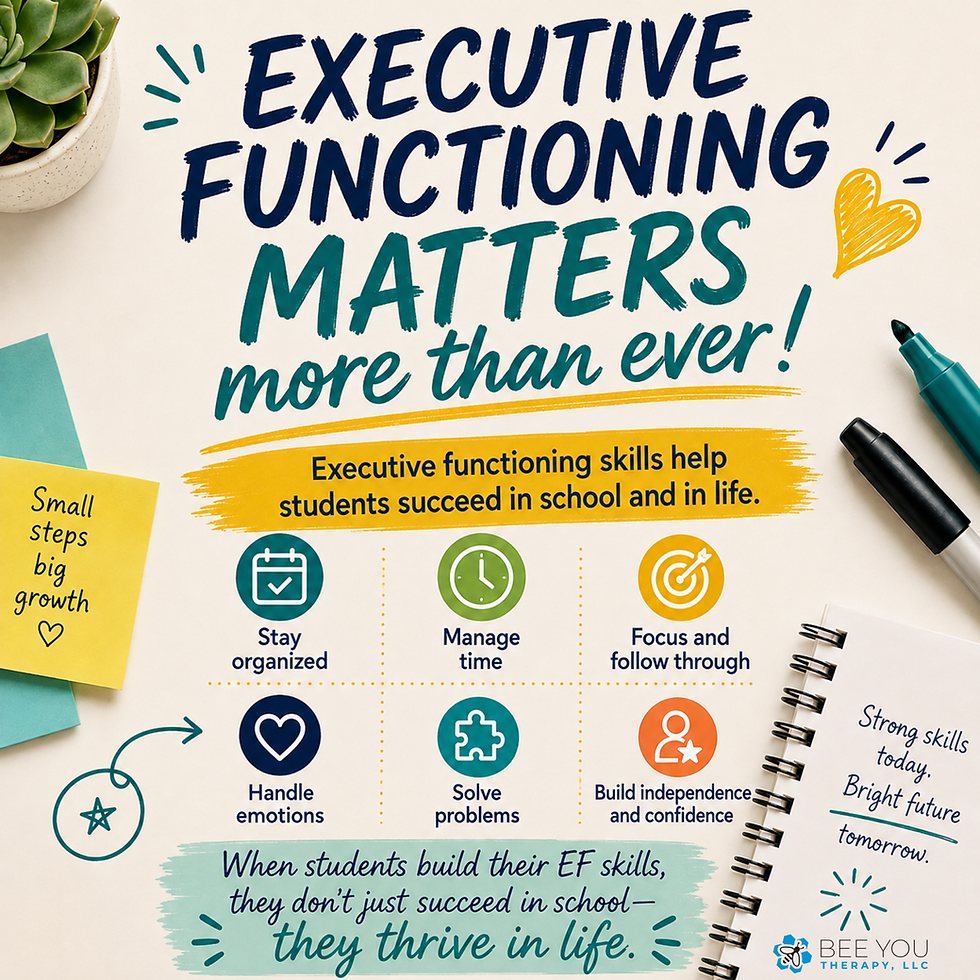
ADHD is really about executive functioning... the behind-the-scenes mental system
that helps you:
● start tasks
● plan
● organize
● prioritize
● manage time
● regulate emotions
● remember things
● switch between activities
Think of executive functioning like the operating system on your phone.
When that system lags, everything lags.
And here’s the piece adults with ADHD were never taught:
ADHD doesn’t make tasks hard because the tasks are big.
ADHD makes tasks hard because they require multiple executive functions
in a row.
For example:
Doing laundry sounds like one task, but it’s actually seven:
1. Noticing it needs to be done
2. Deciding to prioritize it
3. Gathering clothes
4. Starting the machine
5. Switching loads
6. Folding
7. Putting away
That’s seven separate transitions. No wonder it feels like climbing a mountain.
The ADHD Brain Isn’t Reward-Based... It’s Interest-Based
One of the biggest misunderstandings about ADHD is the idea that adults “lack
motivation.”
The truth?
Research shows that ADHD brains rely on:
● interest
● novelty
● Urgency
● emotional connection to activate the prefrontal cortex (Dodson, 2022).
This means:
● You’re not motivated by “should.”
● Your brain needs context or connection to get started.
● Your dopamine release isn’t the same as neurotypical brains.
This is why you can:
✔ Deep clean your whole apartment at 1 a.m.
✔ Spend hours hyperfocused on a hobby
✔ Get lost in a project you love
...but freeze on something like:
✘ scheduling a doctor’s appointment
✘ responding to a simple email
✘ starting a 10-minute task
It’s not inconsistency... it’s how your brain works.
Emotional Regulation Is ADHD, Too
This part often surprises people.
Emotional regulation — frustration, overwhelm, shame spirals, feeling stuck, recovering
from conflict — is actually part of executive functioning (APA, 2013).
If you feel things intensely...
If you shut down fast...
If you get overwhelmed by simple tasks...
If you replay conversations for hours...
You’re not dramatic. You’re not “too sensitive.”
You have a brain that processes emotions differently.
And when emotions get big, your brain has fewer resources available for task initiation.
This is why:
You can know what to do, want to do it, and STILL not be able to do it.
Your brain is not broken... it’s overloaded.
Real-Life ADHD Struggles You’re Not Imagining
These are REAL things adults tell me every single week:
● “I avoid opening mail because I’m scared it’s something urgent.”
● “Laundry feels like it drains all my energy for the whole day.”
● “I lose track of time constantly.”
● “I forget appointments even when I care.”
● “Cooking feels impossible unless someone is nearby.”
● “I feel like I’m always behind.”
● “I’m great at my job, but terrible at life.”
If this feels like your life...
You’re not failing.
You’re not alone.
And you’re not imagining it.
These are consistent ADHD experiences.
The Shame Cycle (The Part No One Talks About)
So many adults grew up hearing:
● “You’re so disorganized.”
● “You never try.”
● “You need to work harder.”
● “Why are you like this?”
● “Get it together.”
Eventually those messages turn into internal beliefs:
“I’m not capable.”
“I’m too much.”
“I’m not enough.”
“There must be something wrong with me.”
This creates the ADHD shame cycle:
ADHD → struggle with tasks → shame → stress → less executive functioning → more
struggle
Which leads to:
● masking
● avoidance
● burnout
● emotional overwhelm
● feeling like you're failing at adulthood
Let me say this again:
You are not the problem. The strategies you were taught were built for brains that don’t
work like yours.
Once you learn to work WITH your ADHD brain instead of fighting it, things finally start
to make sense.
What Actually Helps: Strategies That Work With Your Brain
Here are things I teach my ADHD clients every single day:
1. Break Tasks Into Micro-Steps
Most ADHD overwhelm comes from not knowing where the “real start” is.
Turn big tasks into tiny steps.
Instead of "clean the kitchen":
● Throw away trash
● Put dishes in sink
● Wipe counters
● Run dishwasher
One micro-step creates activation energy.
2. Externalize EVERYTHING
Your brain was not designed to store information... it was designed to create.
Use:
● whiteboards
● timers
● visual schedules
● sticky notes
● planners
● voice memos
External structure creates internal capacity.
3. Body Doubling
This is one of the most powerful ADHD supports.
It means working alongside someone (in person or virtually) while they complete their own task.
It helps with:
● starting
● staying focused
● reducing emotional overwhelm feeling less alone
There’s nothing childish about needing this. It’s neuroscience.
4. Regulate First, Then Start
Most adults try to “push through.”
That usually backfires.
Instead, try regulating your nervous system BEFORE beginning:
● deep pressure
● warm drink
● quiet lighting
● calming music
● stretching
● noise-canceling headphones
A regulated brain performs better.
5. The “Good Enough” Routine
Perfection kills task initiation.
Try:
● good enough laundry
● good enough cleaning
● good enough planning
Consistency > perfection.
6. Emotional Regulation Tools That Actually Work
● Name the emotion
● Remove the shame
● Break the task down
● Focus on just the first 2–5 minutes
● Celebrate micro-wins
● Use kindness, not pressure
Shame shuts the brain down. Compassion turns it back on.
When to Seek Therapy
Therapy can help if you notice:
● burnout
● shutdowns
● daily overwhelm
● feeling behind
● masking exhaustion
● disorganization
● trouble maintaining routines
● emotional rollercoasters
OT + SLP support can improve:
● executive functioning
● sensory regulation
● communication
● daily life skills
● planning
● routines
● emotional regulation
You don’t have to figure this out alone.
If you want support that actually fits your life (not a neurotypical checklist) we’re here.
👉 Schedule an appointment at Bee You Therapy
👉 Learn more about ADHD Support Services
No shame. No judgment. Just support.
If you want support that’s customized to your life, we’re here.
Quick Checklist: ADHD Daily Support Tools
(Great for printing or saving)
✔ 2-minute rule (start for 2 minutes only)
✔ Body doubling
✔ Micro-step breakdown
✔ Sensory setup before work
✔ Written routines
✔ Visual timers
✔ Good-enough standards
✔ Boundaries around emotional labor
✔ Scripted transitions (“When I finish this, I will...”)
✔ Self-compassion statements
References
American Psychiatric Association. (2013). Diagnostic and statistical manual of mental disorders (5th ed.).
Barkley, R. A. (2015). Attention-deficit hyperactivity disorder: A handbook for diagnosis and treatment (4th ed.). Guilford Press.
Dodson, W. (2022). The ADHD brain and motivation: Why “just try harder” doesn’t work. Journal of Clinical Psychiatry, 83(2).


Comments